
Select the Right V BELT type
Choosing the correct V-belt type is crucial for ensuring reliable power transmission, optimal performance, and long service life. An incorrect belt selection can lead to premature wear, reduced efficiency, or even mechanical failure.
1. Choice of V Belt Type
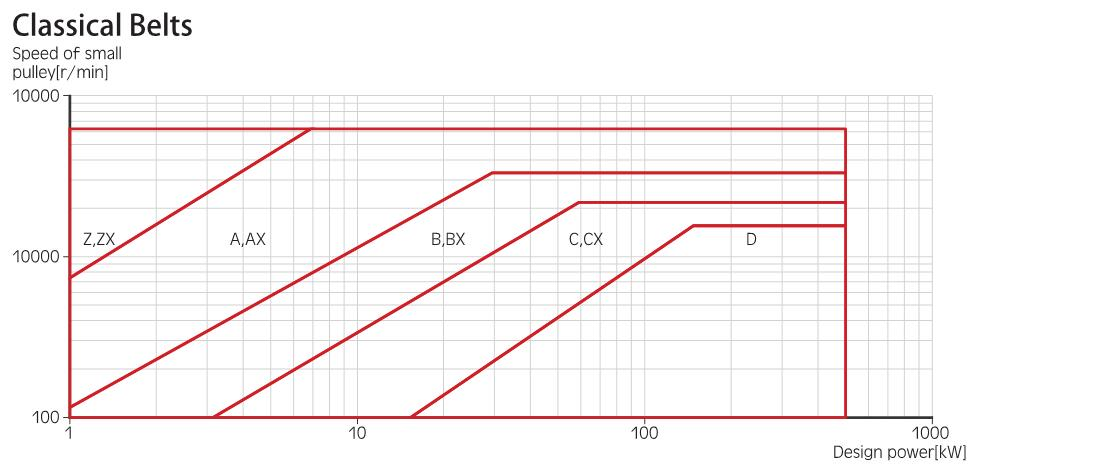
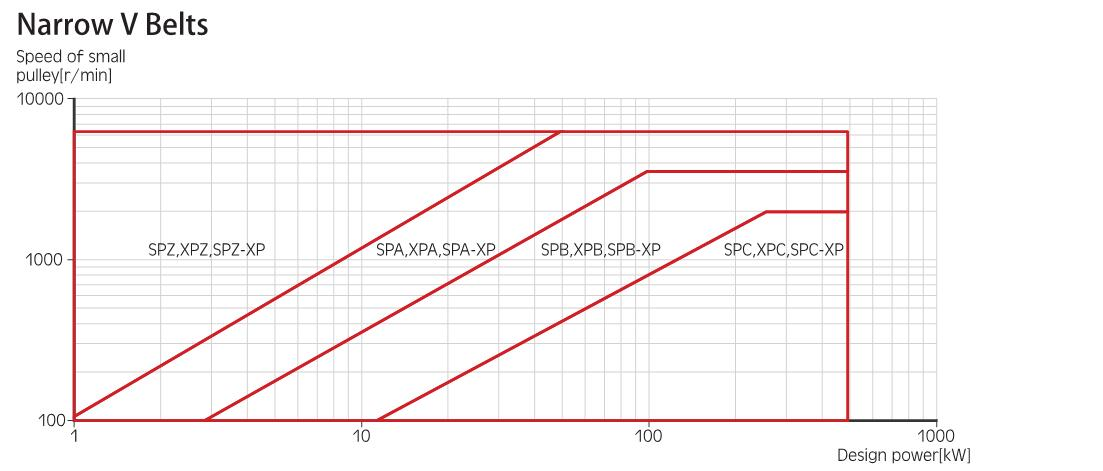
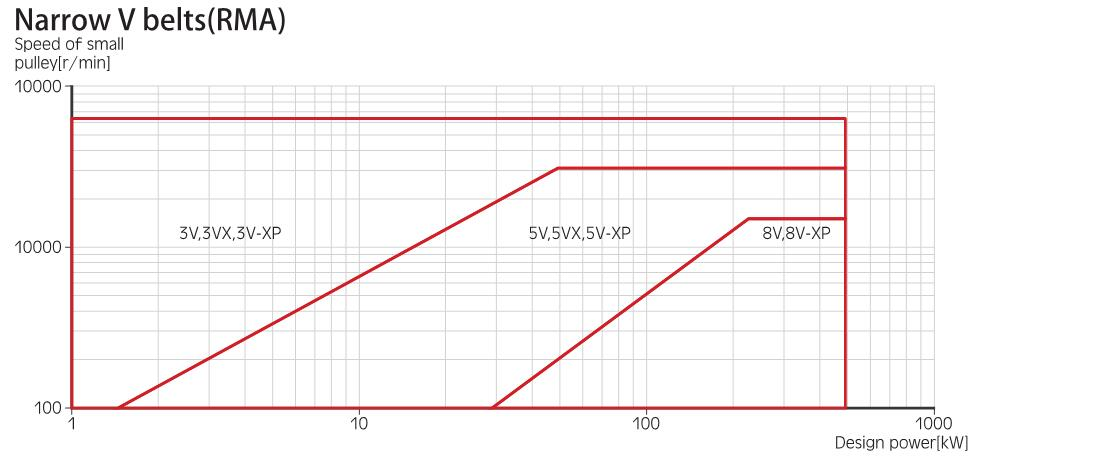
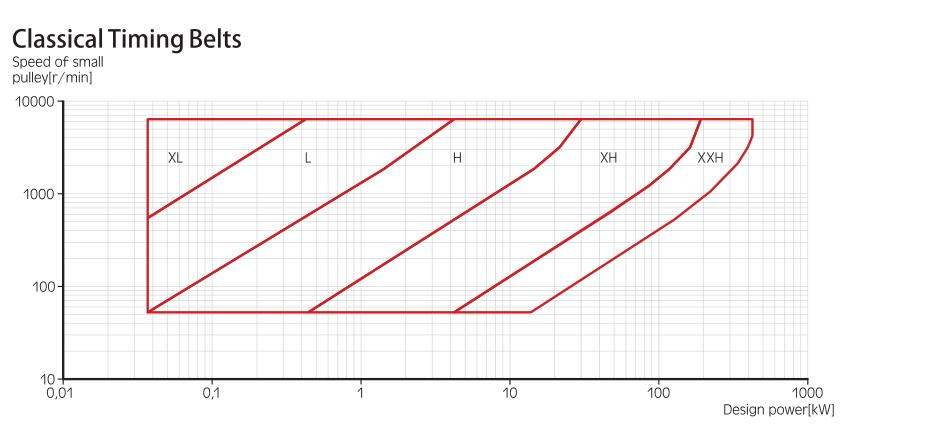
2. Choice of Timing Belts Type
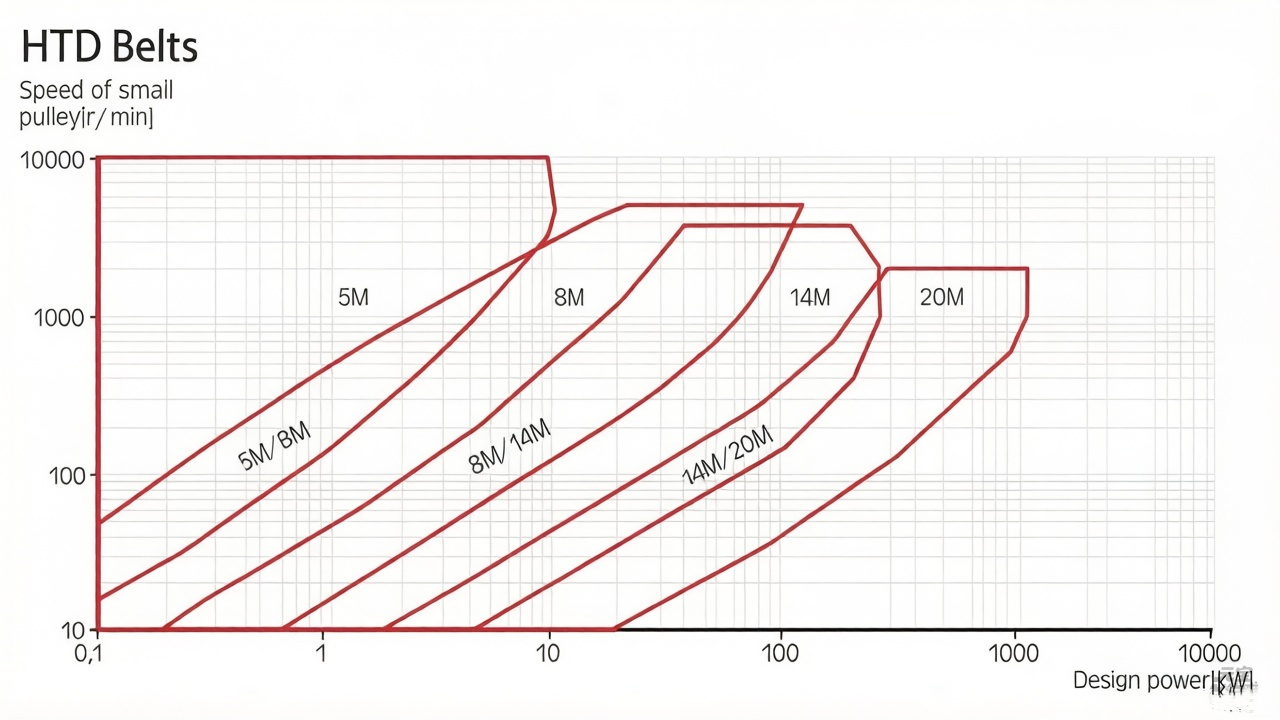
3. Factors to Consider When Choosing a V-Belt
Power Transmission Requirements
- Determine the required horsepower and torque of the system.
- Consider load type: steady, moderate, or heavy/shock load.
Speed and Sheave Diameter
- Ensure pulley diameters meet manufacturer recommendations.
- Check the speed ratio and alignment to prevent slippage.
Environmental Conditions
- Temperature, humidity, and exposure to oils, chemicals, or dust.
- Outdoor applications may require UV-resistant or weatherproof belts.
Belt Life and Maintenance
- Longer life requirements favor cogged or narrow wedge belts.
- Consider ease of replacement and availability of standard sizes.
4. Main V-Belt Types
| Type | Description | Typical Applications |
| Classical V-Belt (A, B, C, D, E) | Traditional trapezoidal cross-section belts; widely used | General machinery, fans, pumps, compressors |
| Narrow Wedge V-Belt (3V, 5V, 8V) | Higher power transmission for same width; thinner profile allows compact design | High-speed drives, small sheaves, modern industrial equipment |
| Cogged/Notched V-Belt (AX, BX, CX, 3VX, 5VX) | Improved flexibility, reduced bending stress; better for small pulley diameters | Continuous duty, high-speed drives, industrial machinery |
| FHP Utility Belts | Smaller belts designed for light-duty applications | Household appliances, small motors, light machinery |
Main Timing Belt Types
| Timing Belt Type | Description | Typical Applications |
| Rubber HTD (High Torque Drive) | Rubber belt with fiberglass or polyester cords, rounded tooth profile for high torque transmission | CNC machines, conveyors, 3D printers, industrial automation, small motors |
| Rubber STD (Standard / Profile S) | Neoprene or rubber with steel cords, trapezoidal teeth | Office equipment, packaging machines, light industrial drives |
| Rubber XL / L / H / XH / XXH (Classical metric) | Neoprene or rubber, trapezoidal teeth, multiple widths and pitch options | Fans, pumps, compressors, agricultural machinery, automotive engines |
| PU T2.5 / T5 / T10 / AT / GT2 / GT3 | Polyurethane belts with embedded steel or aramid cords; high wear and chemical resistance | Robotics, 3D printers, printers, packaging machines, automation equipment |
| PU HTD / STD / GT | Polyurethane belts with trapezoidal or rounded teeth, strong torque capability and low backlash | Precise mechanical drives, conveyors in food and medical industry, high-speed automation |
| Poly-V / Multi-Rib Timing Belt | Rubber or PU belt with multiple longitudinal ribs, combines V-belt and timing belt features | Automotive engines (auxiliary drives), HVAC fans, washing machines, industrial drives |
| Synchronous Belt with steel cords | Rubber or PU with embedded steel cords for extreme tensile strength | Heavy-duty industrial machinery, metalworking, high-load conveyors |
5. Practical Tips
- Always check pulley alignment and tension when installing a new belt.
- Replace all belts in multi-belt drives simultaneously to ensure even load distribution.
- Use belt measuring tools such as a Length Finderor Factfinder Gauge to verify belt size before ordering.
- Consult Mingsen’s catalogs for standard lengths, cross-sections, and compatibility charts.